Look beyond the label
What makes an exhibition immersive?
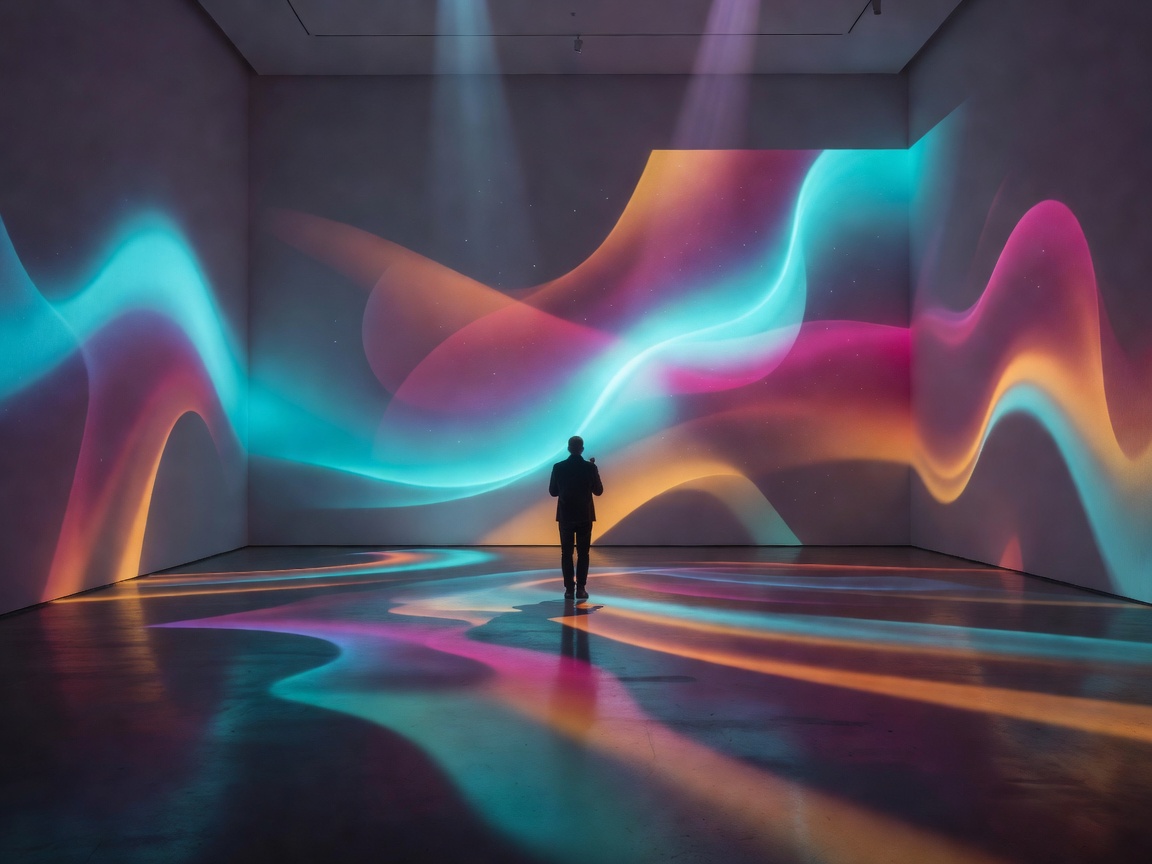
“Immersive” is used for a broad range of cultural experiences. It may describe a gallery where a projection wraps around walls, a sound installation that changes as visitors move, an interactive display that responds to touch, or a headset-based virtual environment. The word alone does not tell you how much visitors can participate or whether the work is built around a particular collection, story, or artist.
At its best, an immersive design gives visitors a meaningful relationship with the material. A large image can create scale; an interactive element can invite comparison or exploration; spatial sound can help locate events within a room. These qualities are different from simply making a room dark and filling it with moving pictures.
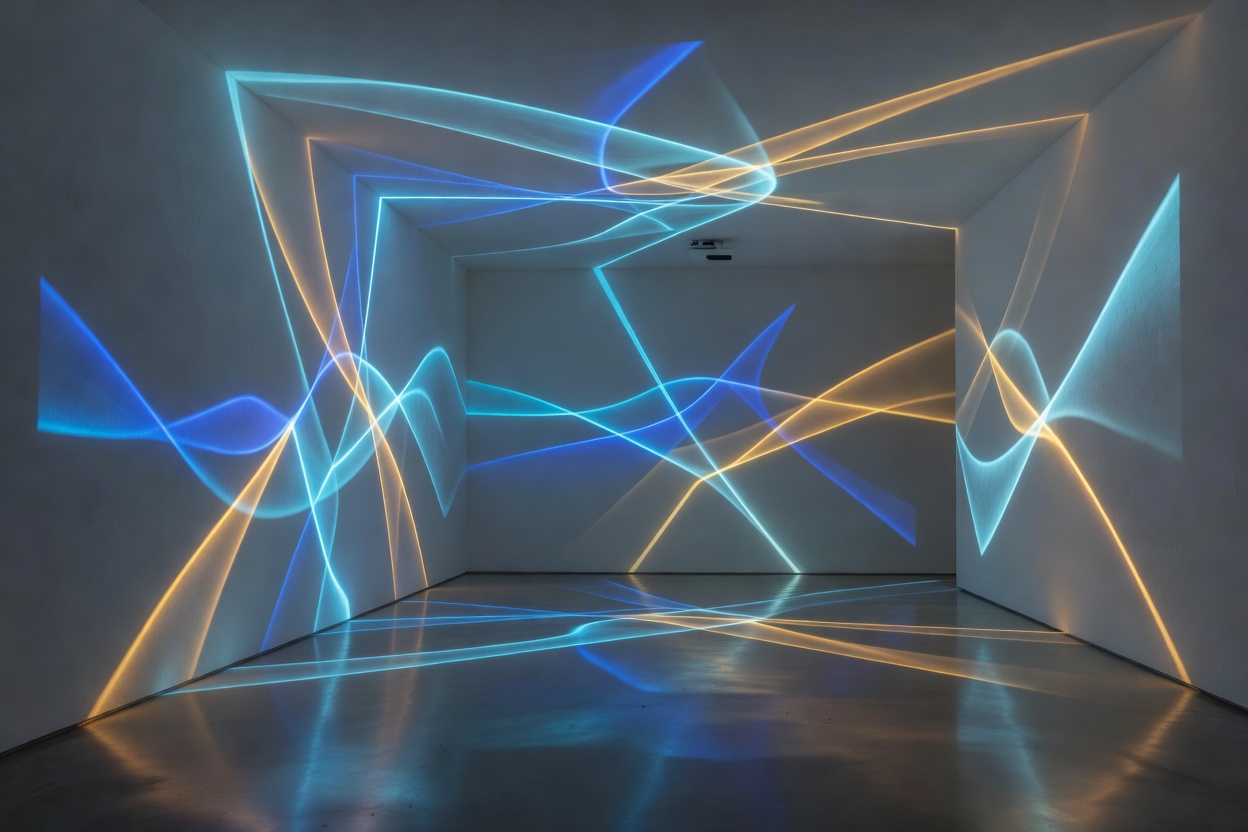
Projection mapping can make existing surfaces part of a visual presentation.
Understand the building blocks
Projection mapping
Projection mapping aligns moving imagery with physical surfaces such as walls, columns, or objects. The result may make architecture appear animated or transform how visitors perceive the room. The physical surface remains present: the technique is not the same as walking through a fully rendered world in a headset. Sightlines, room brightness, crowd levels, and the placement of projectors can influence what each visitor sees.
Spatial audio
Spatial audio uses direction and distance cues to make sound feel as if it occupies a location. It can help create atmosphere or guide attention, whether played through speakers around a room or headphones. The experience can vary depending on where a person stands, and some installations may have quiet zones or audio descriptions. Visitors who are sensitive to loud sound can check the venue’s access information in advance.
Interactive installations
Interaction can be simple—touching a screen, turning a dial, or triggering an animation—or involve movement sensors and responsive environments. A useful question is what action changes the experience. If visitor input is not central, the work may still be visually immersive but primarily observational. Both approaches can be valid; knowing which one to expect helps visitors decide whether it suits them.
Digital reconstructions and storytelling
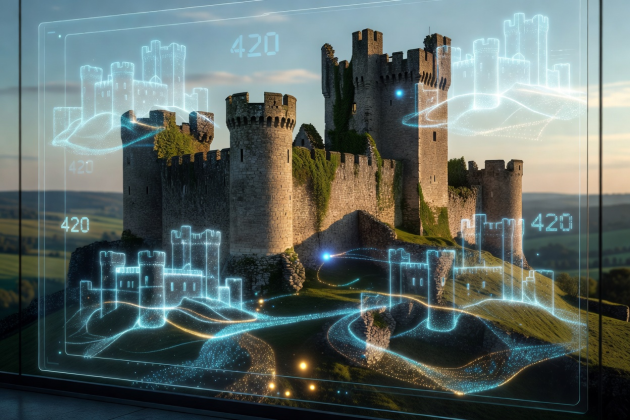
Museums may use digital models to interpret architecture, objects, or historic settings. A reconstruction is an interpretation based on source material, not a direct return to the past. Responsible presentations distinguish known evidence from uncertain details. Digital storytelling can add context through narration, animation, or layered viewpoints, but the quality of the explanation matters as much as the technology.
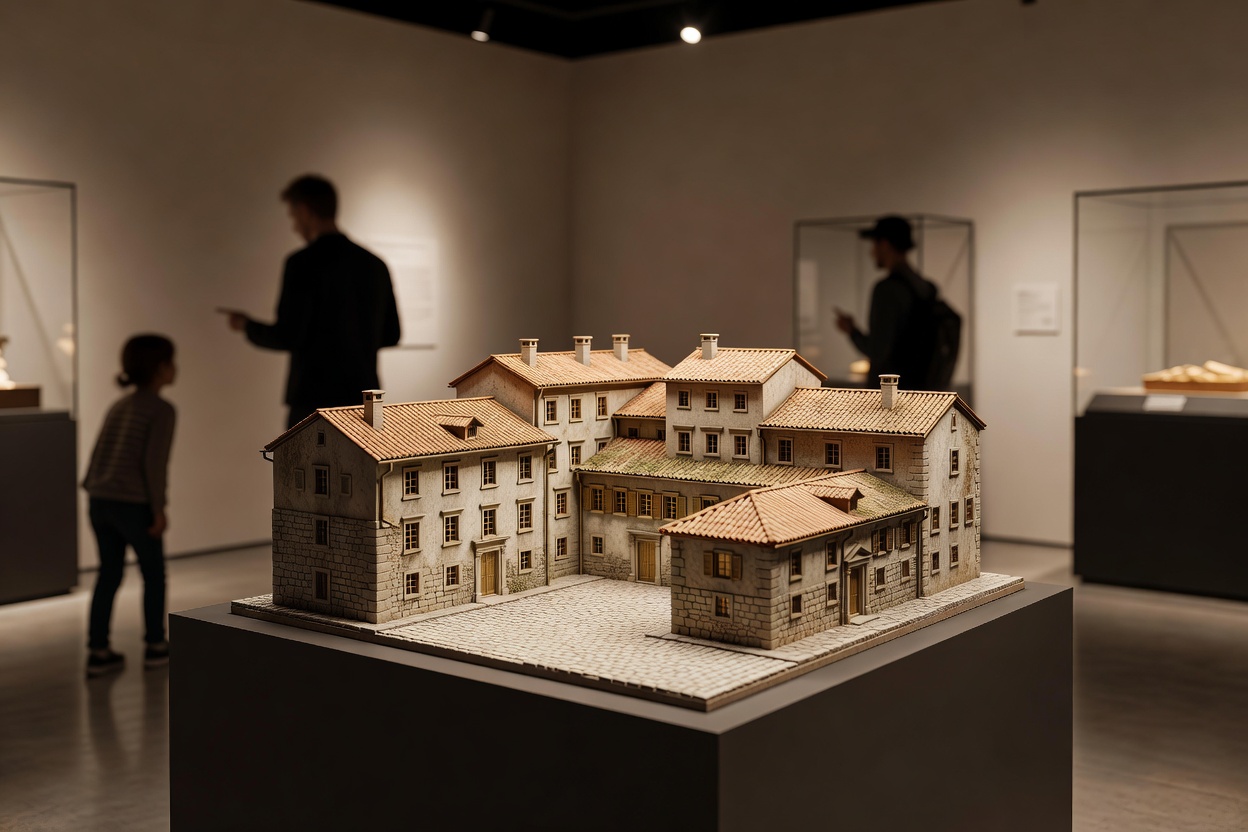
A digital reconstruction can communicate a hypothesis as well as an image.
Headsets or room-scale projections?
Headset-based VR gives each visitor a personal view and can place them inside a modeled environment. It may support a stronger sense of presence, but limits awareness of the real room and can be uncomfortable for some people. Room-scale projection lets visitors share a physical space and often makes it easier to talk, look around, or move at their own pace. It may be less individually interactive, and its visual effects depend on room conditions.
These formats are related but not interchangeable. A museum visit advertised as immersive may include no VR at all. Conversely, a headset experience can take place within a conventional gallery. Read the description for specific details about hardware, participation, and the relationship to the collection.
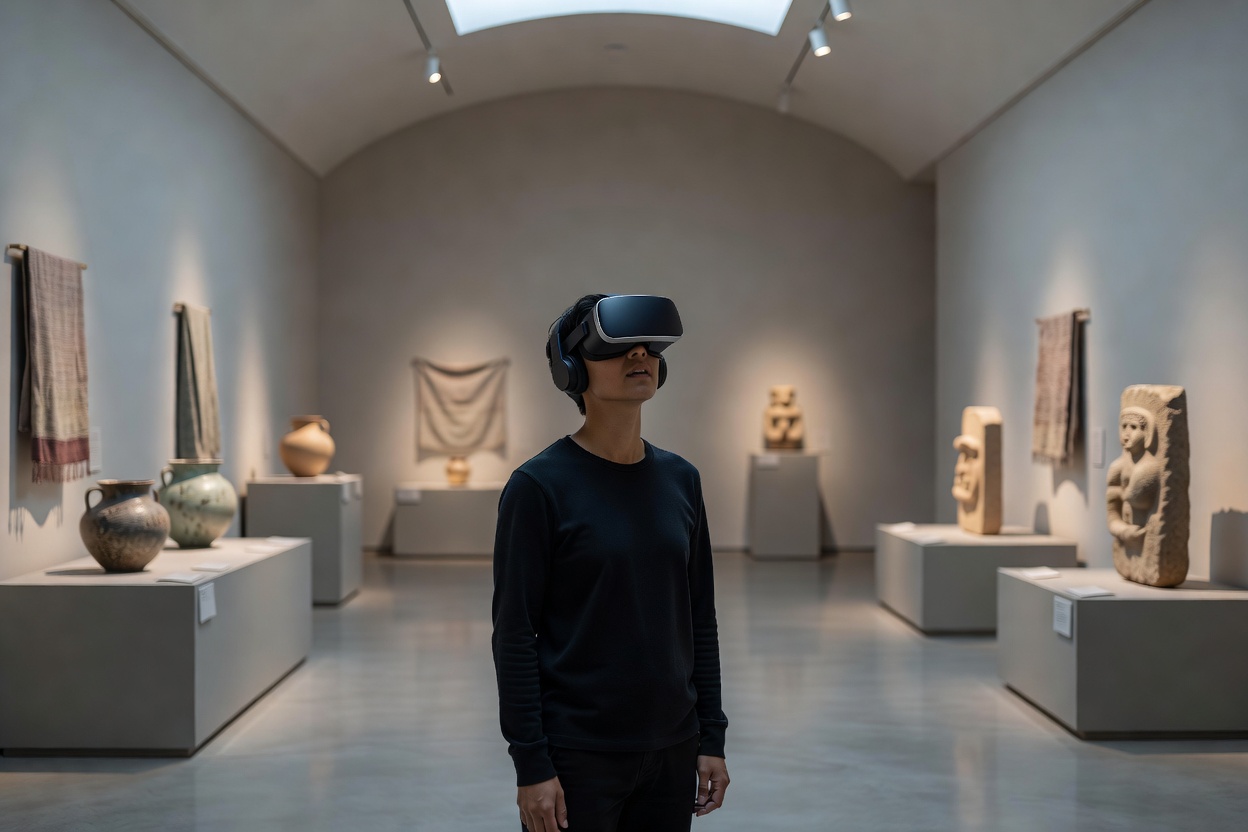
Some exhibitions combine individual headset views with a shared visit.
Plan a thoughtful visit
Check the official institution’s visitor information for accessibility, booking, age guidance, photography, and any timed-entry rules. Temporary programs may change, so verify dates and current details directly. Ask whether the exhibition has flashing imagery, sudden sound, dark spaces, or crowded rooms if those conditions could affect you.
Accessibility can include step-free routes, seating, captions, audio description, quiet sessions, and alternative ways to interact. None should be assumed from the word “immersive.” Ask the venue which arrangements are available and whether they cover every room or only selected parts. If photography is important to you, check the policy: flash, tripods, or photography itself may be restricted to protect works and visitor experience.
How to evaluate an exhibition
Look for a clear account of what the visitor does, what technology is used, and how the work relates to its subject. Does the installation respond to movement? Is participation optional? Are historical reconstructions identified as interpretations? Is there a quieter route or an explanation of sensory effects? These questions help separate a genuinely interactive experience from a primarily visual presentation without suggesting one is automatically better.
Good for
Room-scale installations may suit groups who want to share reactions in the moment. Headset experiences may suit visitors interested in personal exploration of a modeled setting. Digital storytelling can support learners who benefit from visual context—provided interpretation and evidence are made clear.
What to know
Immersive technologies can add scale and sensory detail, but they do not replace curatorial care, historical context, or access planning. Crowds, viewing angles, sound levels, and device fit shape the visit. Specific exhibitions and policies change; rely on an institution’s current official information rather than an old listing.
Continue with virtual travel experiences or compare hands-on formats in our VR destinations guide. Questions and corrections are welcome via Contact.